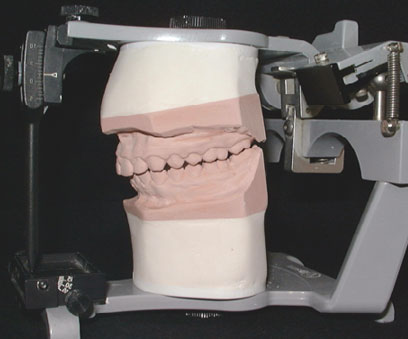
Many people have a "slide" from the position where their teeth meet with the jaw joints in the socket and where they fit completely. If this slide is significant, it can lead to jaw and muscle pain. The photos below show the teeth of a patient who began treatment in pain although her teeth appear to fit reasonably well. Once we relaxed her muscles, her jaw settled back into a relaxed position and it became obvious why she had pain. She's only hitting on one tooth in the back and had to shift her jaw forward and to the right to get her teeth together. The hyperactive muscles led to jaw pain (notice her eyes in the pretreatment photos).
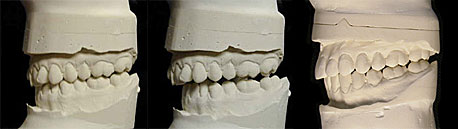
Photos from left to right:
Before Treatment, After Pain Gone, After Orthodontic Treatment.
Once comfortable, we were able to align her teeth in such a way to eliminate the shift and the pain hasn't come back (again, notice her eyes).
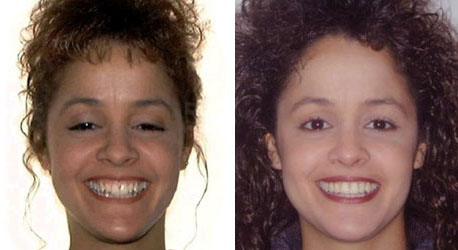
Photos from left to right:
Before Treatment and After Orthodontic Treatment
Many orthodontists diagnose using plaster models that sit on the desktop. They will use "orthopedic devices" or "functional appliances" such as the Frankel, Bionator, or Herbst that force the lower jaw forward. These devices displace the jaw joint forward and can lead to TMJ (jaw joint) problems later in life. In our office, we always mount your models on an articulator (a bite simulator) and treatment plan with the idea of finishing with jaw joints "in the socket" and we have other ways of moving teeth without displacing the jaw joints.